Specialty treatment for congenital dental conditions
Congenital & Developmental Conditions

For the smile
you were
meant to have.

Specialty care for developmental conditions — amelogenesis imperfecta, dentinogenesis imperfecta, Sjögren’s syndrome, congenitally missing teeth, and more.
The same condition. A different outcome.

Care for Conditions You’ve Lived With

Care tailored to you. Results that look like you.

Patients living with congenital and developmental dental conditions — from missing teeth to malformed enamel — have often spent years being told that their options are limited. Our practice exists to prove otherwise. As a board-certified prosthodontist with surgical implant fellowship training, Dr. Schelkopf manages the full scope of these cases — from a single missing lateral incisor to the complete restoration of a smile affected by amelogenesis or dentinogenesis imperfecta — with care that is comprehensive, conservative, and personally designed.

If you’ve been told nothing can be done, or you’ve simply been offered the same plan elsewhere, we’d encourage you to visit our gallery or read patient reviews to see what the right plan looks like.

Our Consistent, Precise Process

Comfortable. Efficient.
Seamless.

Every patient’s case is different — the path is built around the specific condition, the patient’s age, the current state of the teeth and supporting structures, and the patient’s goals for their smile.

Consultation & Diagnosis

A virtual or in-person consultation to understand your history, review prior records, and complete a thorough specialist evaluation. We diagnose the underlying condition precisely — the difference between hypodontia, peg laterals, microdontia, amelogenesis or dentinogenesis imperfecta directs the entire plan.

Personalized Plan & Design

Dr. Schelkopf personally designs the treatment plan and blueprint for your case. Treatment may be entirely restorative — veneers, vonlays, or full-coverage restorations — or it may combine implants, surgical procedures, or staged reconstruction. Every patient and their case is unique, but our standard and philosophy never waivers.

Delivery & Care

Care is delivered by Dr. Schelkopf personally — surgically and prosthetically — with the same controls and precision used in every case. Out-of-town patients fly home in well-fit temporaries between visits, and final delivery is typically completed on the first try-in.

Congenital & Developmental Conditions

Because your care is our specialty

Congenital and developmental conditions of the teeth are not uncommon to everyone — they simply require a clinician who has the education, training, and experience in the surgical and prosthetic management of similar, unique cases. This is the foundation of our specialty prosthodontic care.

Enamel & Dentin Disorders

Amelogenesis Imperfecta & Dentinogenesis Imperfecta

Inherited conditions that compromise the structure or appearance of enamel and dentin require a comprehensive plan — often a full-mouth reconstruction with materials chosen specifically for the patient’s underlying tooth structure. Our specialty training in both reconstructive prosthodontics and aesthetics is what these cases were built for.

Autoimmune & Salivary Dysfunction

Sjögren’s Syndrome

Chronic dry mouth from Sjögren’s dramatically accelerates decay and undermines existing restorations. Our specialty care is designed around the underlying disease — material selection, restoration design, and a long-term maintenance plan are all built to protect the teeth and preserve aesthetics in a high-risk oral environment.

Missing or Malformed Teeth

Congenitally Missing Teeth & Microdontia

Hypodontia, peg laterals, and microdontia — most commonly affecting the lateral incisors — can be addressed with implants to replace missing teeth or with hand-designed veneers and vonlays to restore proportion. The aesthetic stakes are high: the corrected teeth need to belong to the rest of the smile, not stand apart from it.

Cleft & Other Anomalies

Other Developmental Disorders

Patients with cleft conditions, ectodermal dysplasia, and other developmental anomalies often arrive having already completed the surgical phase of their care. The remaining work — aesthetic restoration, replacement of missing teeth, and the final design of the smile — is exactly what our specialty practice was designed to deliver.

Materials, Sequencing & the Long View

Designed as one case, not a sequence of procedures.

Reconstruction at our practice is never a series of disconnected restorations. The entire case is designed as one — every contour planned to support the next, every material selected for its role in the bite, every aesthetic decision made in the context of the whole face. Feldspathic porcelain, lithium disilicate, and zirconia each have a place; knowing which to use, and where, is what separates a reconstruction that lasts from one that does not.

The Standard is uncompromising

Whether the case is six worn anteriors or a full-mouth rebuild combining implants, crowns, and veneers — the same hand diagnoses, designs, prepares, and delivers. The same studio fabricates every component. That is what specialty-level reconstruction looks like.

No One Says It Better Than Our Patients

Our work is our reputation.
Our patients are our legacy.

Your care is an investment in your confidence, your comfort, and your happiness. Our team is always here for you, making every step clear and comfortable, through transparent, thoughtful conversations about expectations before any treatment begins — from appointment coordination and finances to timing and travel.

If you would like to better understand what to expect, see what our patients have to say about their experiences.

Patient reviews
Frequently Asked

Congenital case questions.

I’ve been told nothing more can be done. Should I get a second opinion?
Yes. The most common reason patients come to us is that they’ve been told their condition either cannot be improved further or that the only option is to live with the result they were given. The specialty management of these cases is a narrow field — the right plan often exists, it just hasn’t been offered. A consultation is the place to find out.
What is the difference between a missing tooth I’ve always lacked and one I lost later?
A great deal, clinically. In congenital cases, the bone in the site may have never fully developed because no tooth was ever there to support it. That changes whether and how an implant can be placed, whether bone grafting is needed first, and how the adjacent teeth have drifted into the space. The plan is built around what is actually present — not what would be present in a typical case.
My teeth are discolored or unusually shaped — is that a developmental condition?
It can be. Amelogenesis imperfecta (an enamel disorder) and dentinogenesis imperfecta (a dentin disorder) both present with discolored, weak, or unusually shaped teeth from birth. They are often diagnosed in childhood, but many patients have lived with mild or moderate forms for years without a precise diagnosis. The right plan begins with the right diagnosis.
Will treatment require implants, or only restorations?
It depends entirely on the case. For small or malformed teeth, restoration alone is often the most conservative and ideal option. For missing teeth, an implant is often preferred where the site supports it. Some patients benefit from a combined plan with orthodontics. Because Dr. Schelkopf is dual-trained in the surgical and prosthetic management of these cases, the recommendation is made based on what’s best for the result, not on which procedure was easiest to refer.
Do you treat patients traveling from out of state?
Yes — many of our congenital and reconstructive patients fly in from out of state, and a portion travel internationally. Care can be paced and coordinated around your travel schedule, and Dr. Schelkopf offers video consultations before you ever make the first trip.
At what age should treatment begin?
Definitive treatment is usually completed after facial growth is complete — in late teens for women and early twenties for men — because implant positions and aesthetic proportions need to be stable. Provisional care can begin earlier, and consultations to plan the eventual treatment can be helpful well before then.
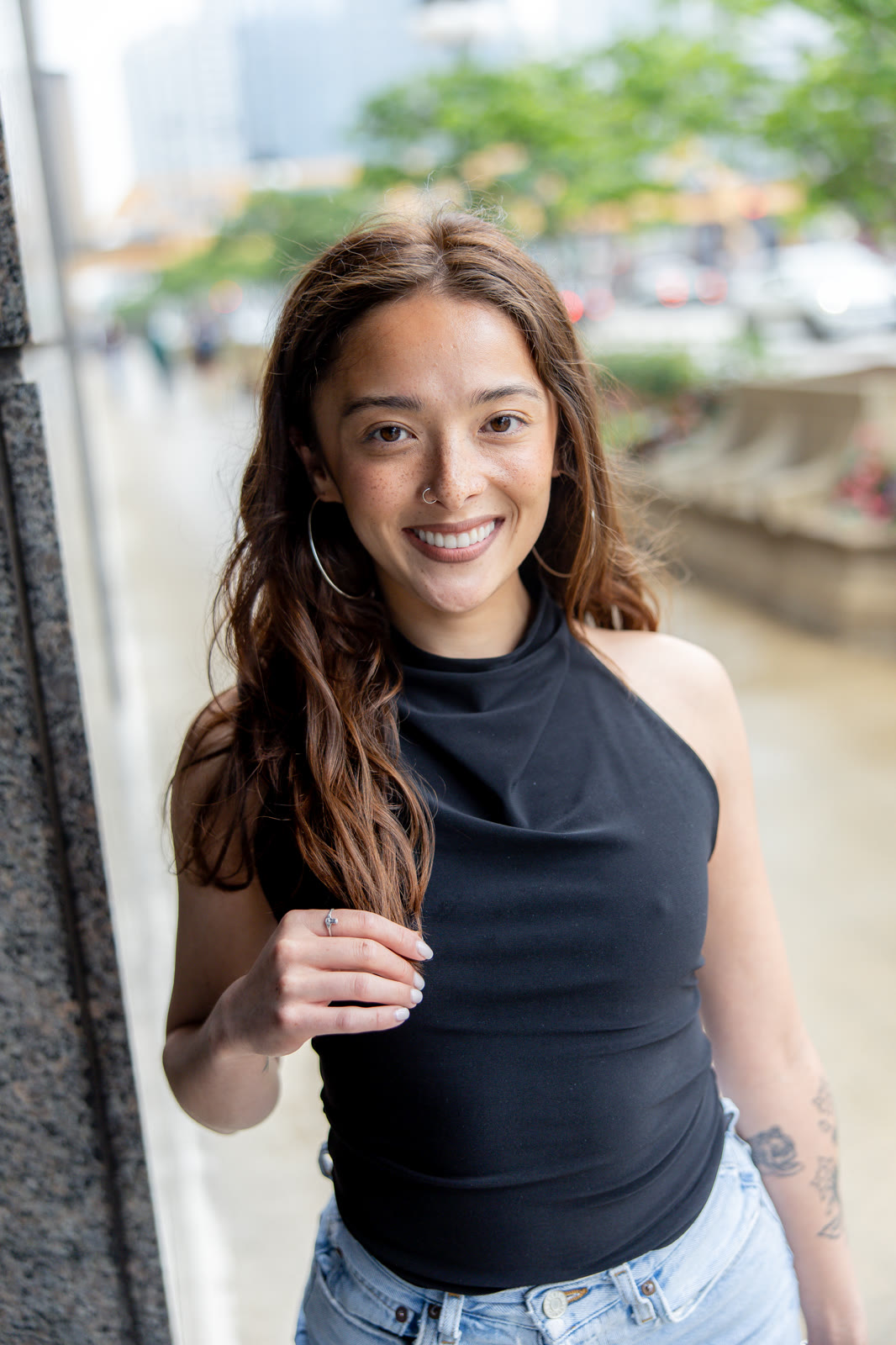
A second opinion you can trust.

Every patient begins with a consultation — virtual or in person. Dr. Schelkopf reviews every congenital case personally before any treatment is recommended.